Start with the job geometry
- Where do cords or light beams need to land relative to the work? Measure the furthest run and any turns around walls, fencing, or equipment.
- Can the unit sit below the task on firm ground, or does it need to be closer due to voltage drop, glare, or shadows?
- How many circuits or light heads are necessary to cover the area without crossing vehicle paths?
How Lubbock conditions change planning
- Wind: Sustained gusts can shift light patterns, stress masts, and affect sound direction. Confirm the site’s wind exposure and any shielding from buildings.
- Dust: Airborne dust can reduce light output and clog filtration. Consider placement upwind of work and away from frequent vehicle traffic.
- Flat, open lots: Even ground is common, but surfaces range from compacted caliche to fresh slab edges. Note whether stabilizers or wheel paths will sit on firm material throughout the shift.
Generator sizing and placement
- Distance to loads: Longer cable runs increase voltage drop. Document the maximum run from the unit to the furthest tool or distribution panel and the number of bends.
- Load profile: Identify start-up surges for compressors, pumps, or welders versus steady loads for lighting and small tools. A mixed profile may require a larger continuous rating.
- Fueling access: Plan a clear fueling corridor that does not cross lift travel lanes. Soft soils or curing slabs inside large facilities may restrict where a generator can sit.
Light tower coverage and stability
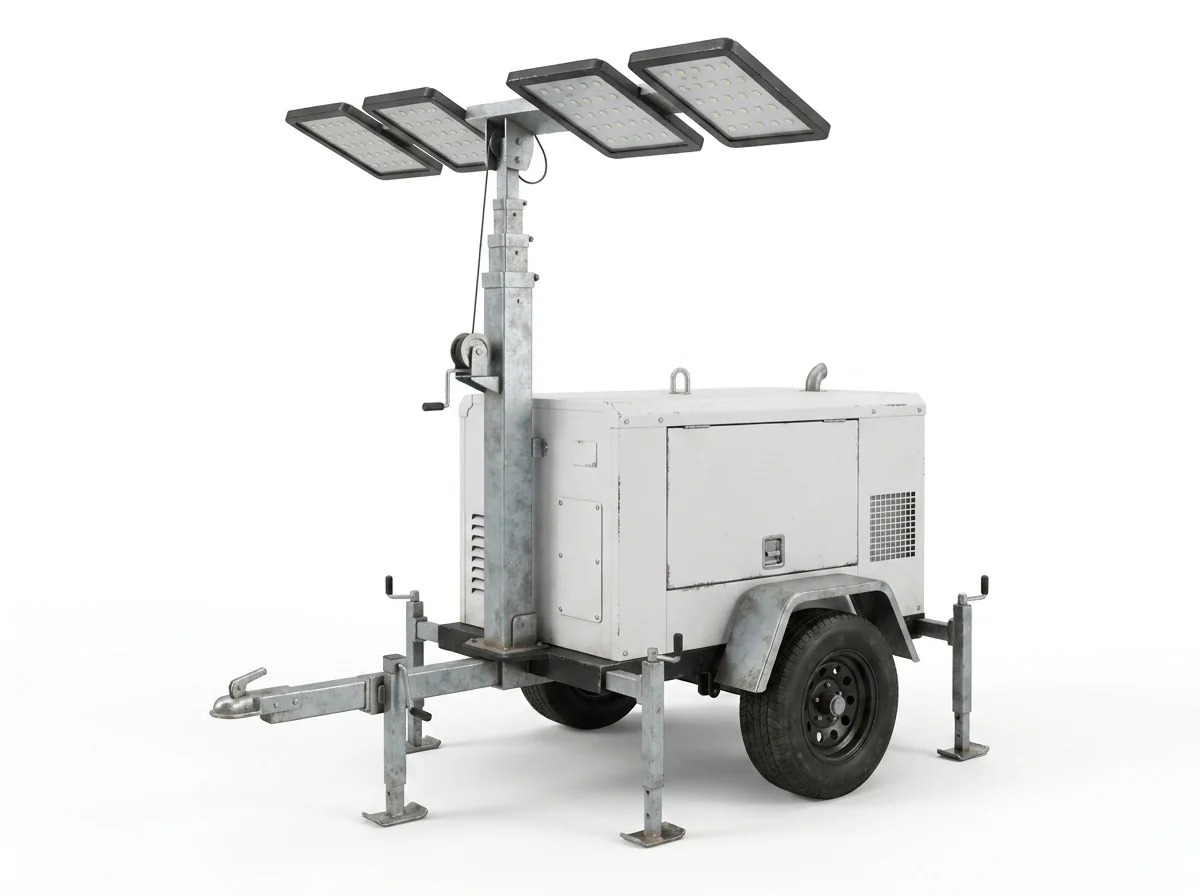
- Beam reach and shadow control: Large interiors and wide laydown yards need overlapping patterns to avoid dark aisles. Note mounting height options and obstructions like roof trusses or stacked materials.
- Ground reaction: Record whether outriggers will rest on compacted aggregate, asphalt, or slab edges. Surfaces that dry quickly after rain can still be soft below crust.
- Glare to sensitive areas: Medical and office wings may require lower mast heights, warmer color temperature, or baffles to keep light out of windows.
Access route and surface checklist
- Gate widths, door heights, and turning radii from the delivery point to final placement
- Ramps, dock thresholds, and slab transitions that could shift a tower’s centerline
- Shared paths with lifts or forklifts that may require cord protection or light head repositioning
Related comparisons
If lighting is for elevated work, confirm equipment overlap with aerial platforms. See: - /electric-scissor-lift-rental/ - /rough-terrain-scissor-lift-rental/ - /boom-lift-rental/
Call details that speed up planning
Have the longest cable run, expected load type, site wind exposure, and surface description ready. For local coordination, call (806) 482-1256 or see /contact/.