Start with the access pattern
- Which door orientation reduces cross-traffic with lifts or service vehicles?
- Can the container sit below the task area so workers retrieve materials without crossing equipment travel lanes?
- What is the tightest gate, door, or turn along the delivery path?
Local conditions that affect placement
- Wind: Containers act as wind breaks and can channel dust. Positioning near building corners or fence lines may create eddies that carry debris toward entries.
- Dust: Frequent dust events make gasket quality and door fit more important for sensitive materials. Note prevailing wind direction relative to openings.
- Ground: Flat sites can hide soft spots, especially along new slab edges or utility cuts. Record whether support will be on compacted base, asphalt, or concrete.
Size and loading considerations
- Footprint vs. aisle space: Longer boxes improve capacity but may block lift turning radii. Measure required aisle width for /forklift-rental/ or /telehandler-rental/ units serving the area.
- Floor load and racking: Heavy parts storage concentrates weight. Gather expected pallet weights and stacking patterns to determine floor bearing needs.
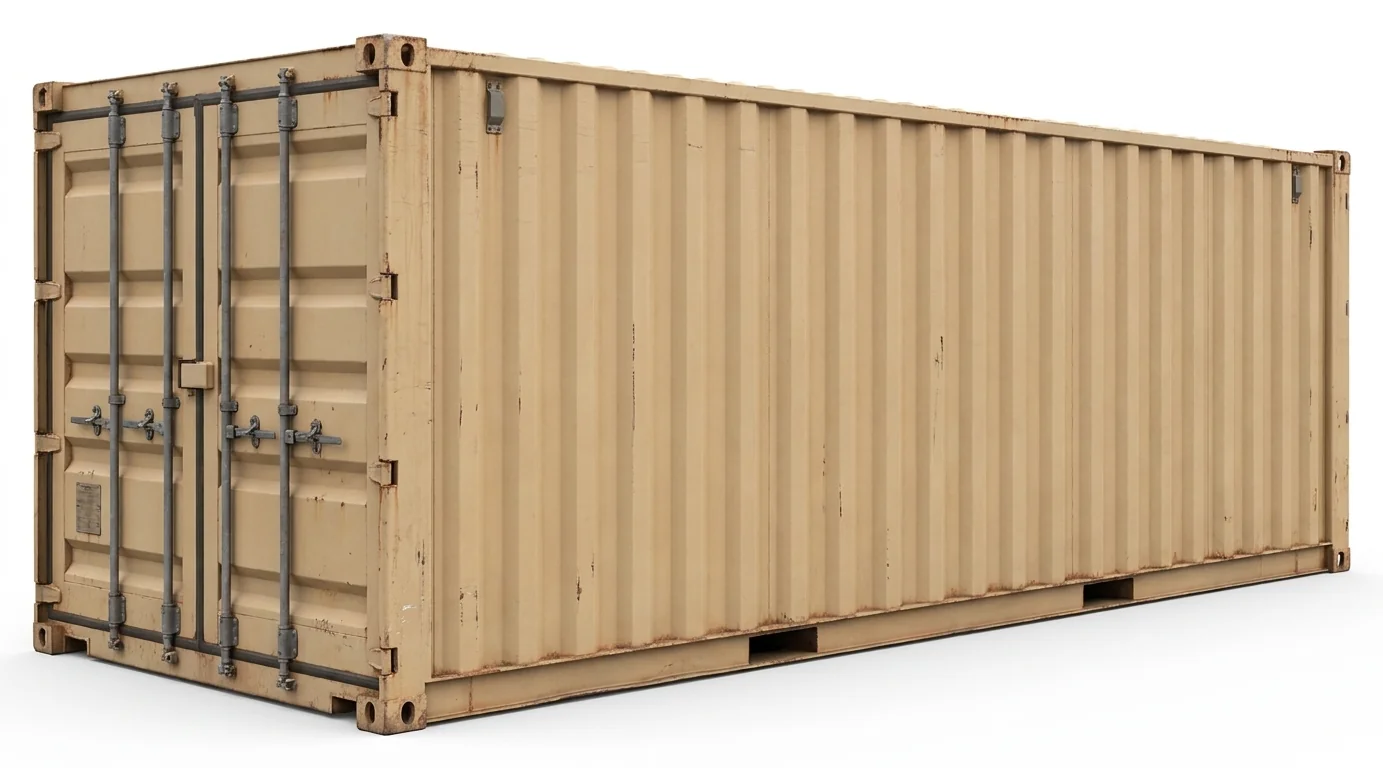
- Door type: Roll-up doors can ease access in tight corridors; double doors improve loading from trucks but need more swing clearance.
Security and adjacency planning
- Place away from overhead work zones where falling debris is possible.
- For medical or office interiors nearby, aim doors away from entries to limit dust migration when opened.
- If sharing space with aerial lifts, keep clear offsets so platforms and outriggers don’t crowd access. See /electric-scissor-lift-rental/ and /rough-terrain-scissor-lift-rental/ for typical working envelopes.
Delivery route checklist
- Approach grade changes, dock lips, and soft shoulders that could tilt the chassis during set-down
- Overhead lines, canopies, or low pipes along the route
- Minimum turning radius from street to final pad and the backing distance required
Call details that help size the unit
Provide target location, door orientation, ground type, and the tightest width or height along the route. For coordination in Lubbock, call (806) 482-1256 or see /contact/.